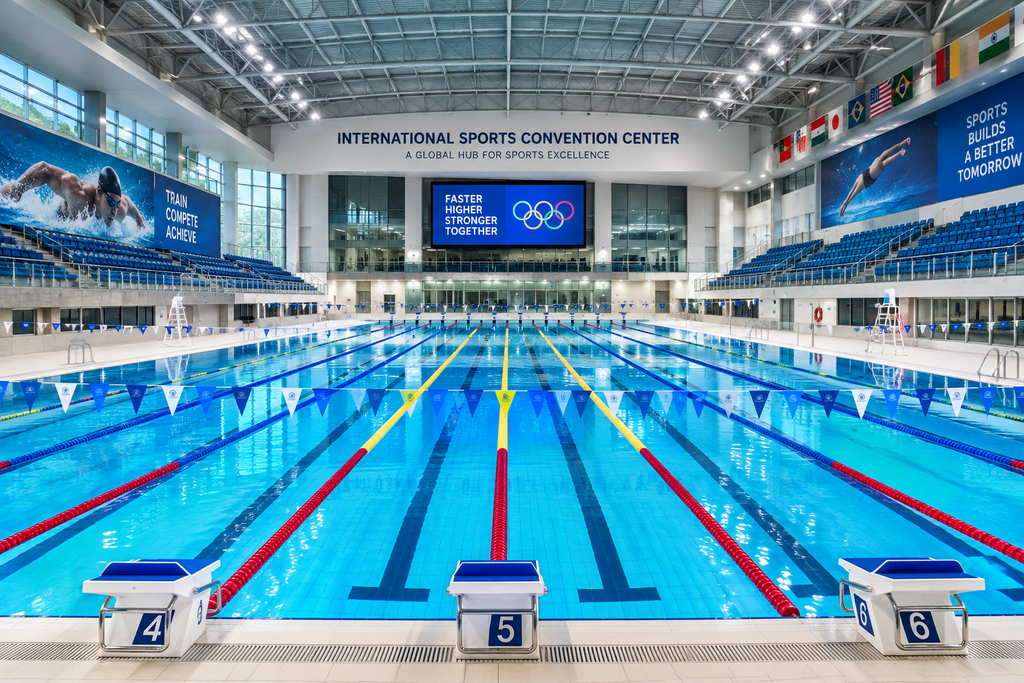
The Government of India should establish Sports Convention Centres to support Olympic preparation. Initially, one Sports Convention Centre should be established in each regional area so that more athletes across India can be trained and prepared for the Olympic Games. There is a need for the Government of India to establish Sports Convention Centres. At the existing Sports Convention Centres, sports that are currently not included or practiced should also be introduced and developed.
Proposal for Establishing Sports Convention Centres in india goverment for Olympic Preparation
1. What is a Sports Convention Centre?
A Sports Convention Centre is a modern integrated sports complex where multiple facilities are developed at one location, including:
- Indoor and Outdoor Sports
- International Competition Arenas
- Training Academies
- Swimming and Aquatic Centres
- Athlete Hostels
- Sports Hotels
- Sports Science Centres
- Medical Centres
- Conference and Convention Facilities
- Large Spectator Seating
- Sports Technology and Media Facilities
The objective should be to create an integrated Sports + Education + Training + Competition + Sports Science + Tourism + Business ecosystem.
2. Main Objectives
Before establishing a Sports Convention Centre, its objectives should be clearly defined.
Major objectives may include:
- International Sports Championships
- National and International Tournaments
- School and College Competitions
- Sports Academies
- Athlete Training Centres
- International Training Camps
- Aquatic Sports
- High-Performance Training
- Sports Conventions and Conferences
- Corporate Sports Events
- Recreational Sports for the General Public
- Sports-related Employment
- Athlete Accommodation
- Sports Broadcasting and Media Facilities
3. Land Requirement
An International Sports Convention Centre can be developed at different scales.
| Level | Approximate Land | Sports Capacity |
|---|---|---|
| Small Regional Centre | 5–10 acres | 5–10 sports |
| Large Sports Centre | 10–15 acres | 10–20 sports |
| International Sports Convention Centre | 20–25 acres | 20–30+ sports |
| Mega Sports City | 50–100+ acres | 30–50+ sports |
For the proposed Maharashtra project, 20–25 acres can be considered as a planning range for integrating indoor sports, an aquatic centre, sports academy, hostel, hotel and competition arena.
4. Proposed 25-Acre Master Zoning
A conceptual 25-acre plan could be divided as follows:
| Zone | Approximate Area |
|---|---|
| Main Indoor Arena | 4 acres |
| Indoor Multi-Sports Hall | 3 acres |
| Aquatic Centre | 3 acres |
| Outdoor Sports Zone | 3 acres |
| Sports Academy & High-Performance Centre | 2 acres |
| Hostel + Hotel | 3 acres |
| Parking & Transport | 4 acres |
| Landscape/Open Space | 2 acres |
| Administration/Convention/Commercial | 1 acre |
| Total | 25 acres |
This is only a conceptual planning model. The final land-use plan should be prepared by qualified architects and engineers according to local development regulations, fire-safety requirements, parking standards and the technical requirements of the relevant international sports federations.
5. Sports That Can Be Included
A 20–25-acre centre could aim to support approximately 25–30 sports, depending on the final design.
Indoor Sports
- Badminton
- Table Tennis
- Squash
- Tennis
- Basketball
- Volleyball
- Handball
- Futsal
- Netball
- Boxing
- Wrestling
- Judo
- Taekwondo
- Karate
- Fencing
- Weightlifting
- Gymnastics
- Artistic Gymnastics
- Rhythmic Gymnastics
- Indoor Athletics Training
Specialised facilities may also be developed for:
- Shooting
- Archery
These sports require appropriate safety-controlled and technically designed facilities.
6. Aquatic Sports Centre
The Aquatic Centre could include:
- 50-metre competition swimming pool
- Training pool
- Diving pool
- Water polo facilities
- Artistic swimming facilities
- Learn-to-swim pool
- Athlete changing rooms
- Officials’ rooms
- Electronic timing and scoring systems
- Spectator seating
- Medical and first-aid facilities
- Water filtration and treatment systems
7. Main Indoor International Arena
The main arena could have a proposed capacity of approximately 10,000–15,000 spectators.
The arena could be designed as a flexible, multipurpose facility for:
- Basketball
- Volleyball
- Handball
- Gymnastics
- Wrestling
- Boxing
- Badminton
- Table Tennis
- Fencing
- Taekwondo
- Judo
- Weightlifting
- Futsal
Retractable seating, temporary sports flooring and convertible court layouts could allow the same arena to host different sports and events.
8. Indoor Multi-Sports Hall
A large 6–8 court indoor sports hall could be developed.
For example:
- 4 Basketball courts
- 8 Badminton courts
- 4 Volleyball courts
- Futsal configuration
- Handball configuration
- Table Tennis zone
- Gymnastics zone
The design should consider not only court dimensions but also clear ceiling height, run-off areas, circulation space, lighting and safety requirements.
9. Outdoor Sports Zone
The centre should also include outdoor sports facilities such as:
- Football
- Hockey
- Tennis
- Archery
- Athletics
- Beach Volleyball
- Cricket practice facilities
- Cycling and skill-training facilities
If a full-size athletics stadium and football stadium are also required, the project may need to be expanded to approximately 30–50+ acres.
10. Sports Academy
The centre should not be used only for competitions. It should also function as an Athlete Development Centre.
The academy could include:
- Beginner Training
- Junior Academy
- Senior Academy
- Elite Athlete Programme
- Talent Identification
- Coaching Academy
- Sports Management
- Sports Psychology
- Sports Nutrition
- Strength and Conditioning
- Video Analysis
- Performance Testing
11. Sports Science and High-Performance Centre
This should be an important component of an international-standard centre.
Facilities could include:
- Sports Medicine
- Physiotherapy
- Sports Psychology
- Sports Nutrition Centre
- Biomechanics Laboratory
- Exercise Physiology
- Strength and Conditioning Gym
- Recovery Centre
- Ice Bath Facilities
- Hydrotherapy
- Athlete Testing Laboratory
- Video Analysis Room
12. Athlete Hostel
A hostel with a proposed capacity of approximately 300–500 athletes could be developed.
Facilities could include:
- Twin-sharing rooms
- Dormitories
- Coaches’ rooms
- Common rooms
- Study rooms
- Laundry
- Medical room
- Dining hall
- Recreation room
- Wi-Fi
- Security
13. International Sports Hotel
A sports hotel with approximately 100–200 rooms could accommodate:
- Athletes
- Coaches
- Referees
- International teams
- Officials
- Corporate guests
- Sports tourists
14. Sports Convention Centre
The convention component should support conferences, exhibitions and sports-related business activities.
Facilities could include:
- Main Convention Hall
- 1,000–2,000-person auditorium
- 300–500-person conference hall
- 5–10 meeting rooms
- VIP lounge
- Press conference room
- Media Centre
- Exhibition Hall
- Sports Equipment Exhibitions
- Sports Business Meetings
15. Parking and Transport
A dedicated parking and transportation zone should be provided.
Proposed capacity:
- 1,000–1,500 cars
- 300–500 two-wheelers
- 30–50 buses
- VIP parking
- Athlete bus parking
- Ambulance access
- Fire-tender access
- EV charging stations
Spectator, athlete, VIP, media and service traffic should be planned separately wherever possible.
16. International Event Infrastructure
For international competitions, the centre should include:
- Broadcast Centre
- TV Production Facilities
- Commentary Rooms
- Photography Areas
- Press Centre
- High-Speed Internet
- Broadcast Infrastructure
- Electronic Scoreboards
- LED Screens
- Timing Systems
- Results Management
- Accreditation Centre
- Doping-Control Facilities
- Officials’ Rooms
- VIP Lounge
Each international sports federation may have separate technical requirements relating to the field of play, athlete areas, seating, officiating, scoring and competition operations.
17. Medical and Safety Infrastructure
The centre should provide:
- 24×7 Medical Centre
- Emergency Room
- Physiotherapy
- Ambulance Bay
- Fire-Safety Access
- First-Aid Rooms
- Security Control Room
- CCTV
- Access-Control Systems
- Emergency Evacuation Routes
- Public-Address System
- Disaster Management Plan
18. Green and Smart Sports Centre
A modern international sports centre should also focus on sustainability.
Possible green features include:
- Solar Panels
- Rainwater Harvesting
- Wastewater Treatment
- Water Recycling
- LED Lighting
- Natural Ventilation where appropriate
- Energy-Efficient HVAC Systems
- Green Landscaping
- EV Charging
- Smart Building Management Systems
19. Entry Gates and Traffic Management
Different entrances could be provided for different users:
Gate 1 – General Public
Gate 2 – Athletes and Teams
Gate 3 – VIPs
Gate 4 – Media
Gate 5 – Service, Fire and Emergency Access
This arrangement can help manage large crowds during major competitions.
20. Conceptual Master Plan
                         MAIN ROAD
================================================

                  MAIN ENTRY / PLAZA

================================================

             🏟️ 10,000–15,000 SEAT ARENA
                         │
                         │
              🏸 MULTI-SPORTS HALL
                         │
          ┌──────────────┴──────────────┐
          │                             │
   🏊 AQUATIC CENTRE             🏋️ HIGH-PERFORMANCE
          │                         CENTRE
          │                             │
          │                      SPORTS ACADEMY
          │                             │
          └──────────────┬──────────────┘
                         │
                  🏢 CONVENTION CENTRE
                         │
                  🏨 HOTEL + HOSTEL
                         │
                  🚗 PARKING / BUS AREA

             🎾 OUTDOOR SPORTS ZONE
             ⚽ FOOTBALL / HOCKEY
             🏹 ARCHERY / TENNIS

================================================
                       SERVICE ROAD
================================================
21. Proposed 30-Sport Model
A possible 30-sport model for a 20–25-acre International Sports Convention Centre could include:
- Badminton
- Basketball
- Volleyball
- Handball
- Futsal
- Netball
- Table Tennis
- Squash
- Tennis
- Boxing
- Wrestling
- Judo
- Taekwondo
- Karate
- Fencing
- Weightlifting
- Gymnastics
- Artistic Gymnastics
- Rhythmic Gymnastics
- Swimming
- Diving
- Water Polo
- Artistic Swimming
- Athletics Training
- Football
- Hockey
- Archery
- Cricket Training
- Beach Volleyball
- Cycling Training
Important: Thirty sports do not require thirty separate stadiums or buildings. Several sports can be accommodated through multipurpose and convertible facilities.
22. Process for Establishing the Project in Maharashtra
Step 1 – Concept and Feasibility
- Identify suitable land
- Conduct a market study
- Conduct a sports-demand study
- Analyse existing sports facilities
- Conduct financial feasibility
Step 2 – Land and Legal Requirements
- Land title verification
- Zoning
- Development permissions
- Environmental requirements
- Fire-safety requirements
- Building approvals
Step 3 – Master Planning
Appoint:
- Sports Architect
- Structural Consultant
- MEP Consultant
- Landscape Architect
- Sports Facility Consultant
- Traffic Consultant
Step 4 – International Sports Standards
Each sports facility should be designed according to the applicable rules and technical standards of the relevant international sports federation.
Step 5 – Financial Model
Possible financing models include:
- Government funding
- Private investment
- Public-Private Partnership (PPP)
- Sports Federation participation
- CSR funding
- Sponsorship
- Naming Rights
- Hotel and retail revenue
- Membership fees
- Tournament revenue
Step 6 – Construction
The project could broadly follow this sequence:
Planning → Design → Approvals → Tender → Construction → Testing → Certification → Opening
23. Revenue Sources
The centre should not depend only on tournaments.
Potential revenue sources include:
- Sports Academy Fees
- Court Bookings
- Swimming Memberships
- Gym Memberships
- Tournament Hosting
- International Training Camps
- Hotel
- Hostel
- Restaurants
- Convention Hall
- Exhibitions
- Corporate Events
- Sponsorship
- Naming Rights
- Advertising
- Retail Shops
- Sports Equipment Stores
- Parking
- Sports Tourism
24. International Examples and Lessons
International sports developments can provide useful planning references, including:
- Singapore Sports Hub – integration of stadium, indoor arena, aquatic facilities and other sports infrastructure.
- Hangzhou International Sports Centre – integration of major indoor arena and aquatic facilities.
- London Aquatics Centre – an example of an Olympic legacy aquatic facility.
- Coomera Indoor Sports Centre – a multipurpose multi-court indoor sports model.
- Isa Sports City Arena, Bahrain – a multipurpose indoor arena model for sports and events.
Proposed Maharashtra Model
Maharashtra International Sports Convention & High-Performance Centre
Proposed Land: 25 Acres
Sports: 30 Sports
Main Arena: 10,000–15,000 Seats
Indoor Sports Hall: 8 Courts
Aquatic Centre: 50-metre Competition Pool
Athlete Hostel: 300–500 Beds
Sports Hotel: 100–200 Rooms
Sports Academy
Sports Science & Medical Centre
Convention & Exhibition Centre
Parking: 1,000–1,500 Cars
International Broadcast & Media Centre
Solar Power + Rainwater Harvesting + Smart Building Systems
Sports + Coaching + Athlete Development + Sports Science + Education + Competition + Technology + Tourism + Hospitality + Business.
Such a network of centres could provide athletes with better access to training, competition and high-performance support. The final number, location and sports offered at each centre should be determined through a statewide sports-needs assessment, existing infrastructure mapping, athlete demand, land availability, financial feasibility and the technical requirements of the respective sports federations.
The goverment of india should initially establish regional sports covention centers in every group of 8 to 10 district to provide athletes with the necessary facilities,training, coaching,and support and to encourage them to prepare for the Olympic Games.